
Car protection accessories: beating Lowveld UV damage
PROTECTION
How to Protect Your Car Interior from Lowveld UV Damage
Your dashboard is losing its fight with the sun, and it has been losing for months.
Every Nelspruit driver knows that after a few hours in a shopping centre parking lot, the heat rolls out of the car like something from a bakery.
And while putting your hands on a steering wheel that has been baking in the sun for hours is a thoroughly uncomfortable experience, what you might not realise is that the Lowveld sun is ageing your car’s interior, one shopping trip at a time.
The good news is that a fix is not complicated, and it does not mean driving around behind windows so dark that those travelling past you might mistakenly think that you are some sort of Kardashian hiding from the paps.
Instead, it means having some understanding about what your windscreen is actually up against, and then choosing the right car protection accessories.
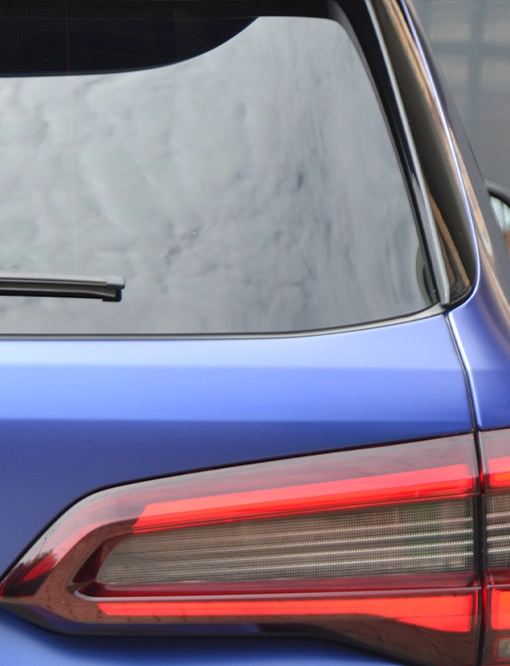
Lowveld sun vs. Your car interior
Direct summer sun can easily push a dashboard’s surface temperature past 50 degrees Celsius within an hour, hot enough to dry out vinyl, fade fabric, crack leather stitching and warp trim on any vehicle left without protection.
Mpumalanga’s UV index climbs into the extreme category, 11 and above, for much of the year, and the windscreen is the largest single pane of glass on any car.
It lets in more UV and infrared heat than every other window combined, which is why the cabin right behind it, the dashboard, steering wheel and front seats, ages faster than anywhere else.
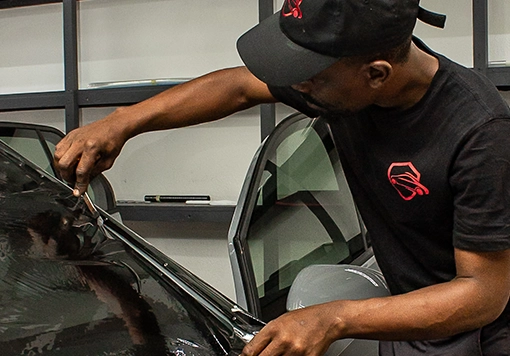
Clear film versus dark tint, What South African law allows
South African law sets a minimum visible light transmission of 70 percent for the windscreen and 35 percent for every other window, under Regulation 202(3) of the National Road Traffic Regulations.
This is exactly why a dark tint belongs on the rear windows and a clear UV film belongs on the windscreen.
To break it down:
| Aspect | Clear windscreen film (Airblue) | Dark tint film |
|---|---|---|
| Legal on the windscreen | Yes, stays above 70% VLT | No, drops below the legal minimum |
| UV blocked | Over 99% | Similar, but only where legally allowed |
| Visible darkening | None, glass stays optically clear | Noticeable colour change |
| Best used on | Windscreen | Front and rear side windows, within the 35% limit |
An option that is becoming increasingly popular, as an alternative to conventional windscreen film, is the Airblue windscreen film. Because it uses a nano ceramic layer rather than a dye or metal layer, it rejects heat and UV without the telltale darkness of a dyed tint.
This makes it street legal on the one pane of glass every other film is not allowed to touch.
Why Nelspruit drivers are choosing Airblue specifically?
Airblue windscreen film blocks over 99 percent of UV rays, a massive share of infrared heat, while keeping the glass as clear as the day the car left the factory.
And it gives drivers some other benefits too.
Skin and eyes are shielded from UV that passes straight through untreated glass during years of daily driving, the cabin temperatures stay lower, so the aircon works less and fuel is not wasted cooling an oven, and visibility stays sharp for night driving, since there is no dark film to interfere with sensors or headlights.
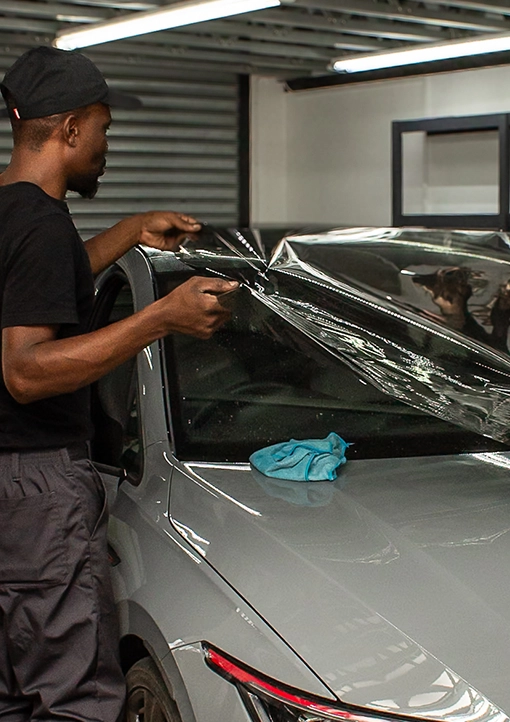
Fitted by a specialist team such as Lowveld Smash and Grab in Nelspruit, the film goes on bubble free and can be matched precisely to the curve of your specific windscreen, so that it looks like it is not there at all.
A hot Lowveld summer is not the season to gamble on a bare windscreen. The right car protection accessories cost far less than reupholstering a sun damaged interior, and fitting takes less time than a coffee break in town.
Your dashboard, and your future self, will thank you.
Frequently Asked Questions Car protection accessories: beating Lowveld UV damage
What is Airblue windscreen film?
Airblue windscreen film is an optically clear, nano ceramic film fitted to the inside of a windscreen. It blocks over 99 percent of UV rays and reduces infrared heat, without darkening the glass or affecting visibility.
Is windscreen tinting legal in South Africa?
Dark tinting on a windscreen is not legal in South Africa. Regulation 202(3) of the National Road Traffic Regulations requires at least 70 percent visible light transmission on the windscreen, so only clear UV films such as Airblue qualify.
Does clear UV film actually keep a car cooler?
Yes. Clear UV film blocks the infrared component of sunlight responsible for most cabin heat build up, which keeps surface and air temperatures lower and reduces how hard the aircon works on a hot Lowveld day.
How long does windscreen UV film last?
Quality nano ceramic windscreen film typically lasts 5 to 10 years without peeling, bubbling or yellowing, provided it is professionally fitted and the vehicle is not cleaned with harsh abrasive products.
What other car protection accessories help against Lowveld sun damage?
Interior fabric protection, leather conditioning and a reflective windscreen sunshade all work well alongside windscreen film, forming a layered defence against fading, cracking and heat damage during peak UV months.


